I didn't become an IELTS expert overnight.
I can still vividly remember standing in front of my first IELTS class thinking: am I doing this right?
Because, while I had solid teaching experience behind me, IELTS felt like a different discipline. One with its own logic, its own standards, its own way of rewarding candidates. And I hadn't yet learned to understand it from the inside.
So I learned. In depth. Over the next two years I studied the exam from every angle I could while teaching at International House London, one of the world's most respected English Language Teaching institutions. I trained there as an IELTS Writing and Speaking Examiner.

And it was when I qualified as an examiner that my expertise truly went to the next level. Sitting on the other side of the marking desk, using the band descriptors to assess Task 1 and Task 2 scripts, I could see precisely what the exam rewards — and what it doesn't.
It wasn't essay templates, nor vocabulary lists, nor formulaic structures. It was something more fundamental: the quality of the judgements a candidate makes as they write.
That insight shaped everything that followed.
I went on to teach IELTS full-time at an international college in Cambridge. I spent thousands of hours in the classroom dealing with every task type, every common error, every question that serious candidates ask.
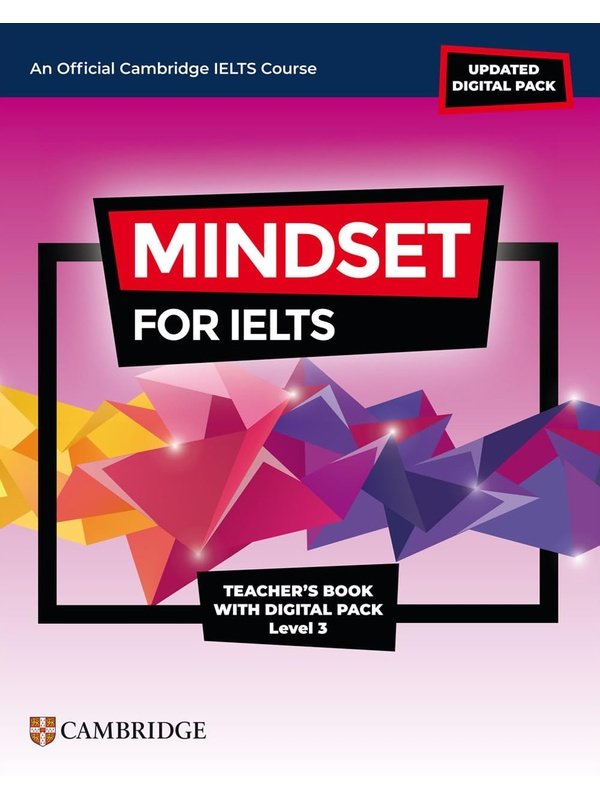
In parallel, I began writing coursebooks for Cambridge University Press and Assessment, translating everything I'd learned into materials used by students and teachers worldwide. The most widely used of these is Mindset for IELTS, a course that has helped hundreds of thousands of students prepare for and pass the exam.
More recently, a teaching agency contacted me. Would I take some one-to-one tutorials for students who were targeting Band 7 and above, and were applying to top universities around the world? I accepted.
These were strong candidates. Their abilities in speaking, reading and listening meant they were more than capable of flying past Band 7 in each of those skills. But it was their writing that was holding them back.
They shared the same confusions I'd seen in so many students before — the same gaps between what they thought they were doing and what an examiner actually sees, the same uncertainty about why Band 7 kept not happening.
I also noticed a pattern. Too much of our tutorial time was spent going through how to approach each question type. This was ground that could have been covered before we met, and it meant less time for the thing that makes the leap to Band 7+ possible: focused analysis of what and how they were writing, and clear, examiner-led guidance.
Beat Band 7 is the course I designed to fix that. The groundwork – understanding each task type, knowing what examiners look for, building the right approach – is delivered through video, so that every coaching session can go straight to the writing itself.
If your speaking, reading and listening are at a high level but Band 7 for writing feels frustratingly out of reach, it's probably not a language problem.
It's a judgement problem: the gap between the decisions you're making on the page and the decisions an examiner recognises as Band 7. That's exactly what Beat Band 7 is built to address.
If that sounds like your situation, find out how the course works.